

Trail cameras and photographic traps
Trail cameras are systems capable of taking pictures of a subject that reaches a predetermined point without the presence of any human operator. In spite of what one might think, these devices are not a recent invention: the first photographic traps were made at the end of the 19th century by an American photographer. These were enormous cameras, equipped with powder flashes, taking a single photograph thanks to rudimentary and ingenious systems of ropes and levers. Since then, technology has made great strides, but it is only a few years ago that the photographic traps, until yesterday and even today set up by some naturalist photographers, became a standard product with the name of trail cameras.
Trail cameras and photographic traps – general features
Photographic traps is the generic name given to the systems defined above. This term is generally used to indicate self-built systems set up in the field, usually non-standard and extremely complex. The standard photographic traps on the market are called trail cameras or camera traps: they have digital sensors, they are small, light, robust and waterproof; they take photographs and videos thanks to an infrared sensor that activates the camera when the subject arrives at a predetermined point, they work day and night thanks to infrared illuminators, they are able to store thousands of images on a single SD card. Trail cameras for their practicality and ease of use – as well as for their relatively low costs – are widely used not only in nature photography but also for wildlife management and for control and video surveillance of homes, industrial warehouses, and manufactured goods in general.
Trail cameras and photographic traps – image quality
Of course the images obtained with the trail cameras on the market do not have the excellent quality of the photographic traps set up in the field by professionals who use sophisticated and expensive cameras and install them in nature, taking care of every detail in hours of work, from lighting to presence sensors, to solutions for camouflage and weather protection. But if the BBCe National Geographic photo traps are unattainable for most, certainly camera traps can give great satisfaction and produce good quality images and videos.
Our trail cameras
The trail cameras we are in deal are well-made devices produced in China, we personally tested and used them profitably. Some models have a lens that returns a wide angle perspective, others a standard lens. All are equipped with a so-called “invisible” LED illuminator (wavelength 940nm) which allow the camera to shoot scenes even in absolute darkness. We stress the fact that any camera trap with LED illuminator produces color images during the day and black and white in the night, unlike the photographic traps that use flash light which always take color images, but paying the price of a much greater visibility. Some models are able to send images via e-mail or MMS.
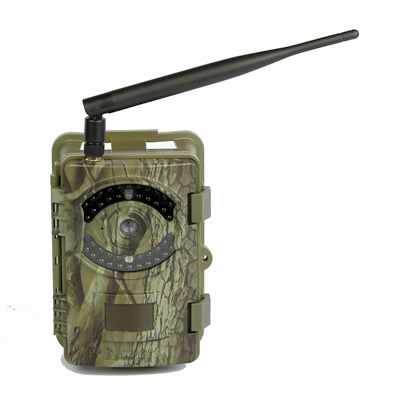
Big Eye G3
Of all the trail camera models with e-mail or MMS sending that we tested in the field, the Big Eye G3 proved to be the most reliable. This camera mounts a standard lens, therefore suitable for medium-field shooting, which is generally the most advisable solution for various types of use. The Big Eye G3 trail cameras are equipped with IR LED illuminators (with invisible light), and also with visible light LEDs which for obvious reasons we do not recommend. The configuration of the parameters relating to e-mail and MMS is quick and easy.
Robot D30
The Robot D30 is a real workhorse for those who set up photographic traps to shoot wild animals, and personally among all the camera traps we use this is the one we install most often. In addition to being distinguished by an excellent quality / price ratio, this model mounts a standard lens, therefore suitable for medium-range shooting, which is generally the most advisable solution for various types of use. The Robot D30 camera traps are equipped with IR LED illuminators (invisible light).
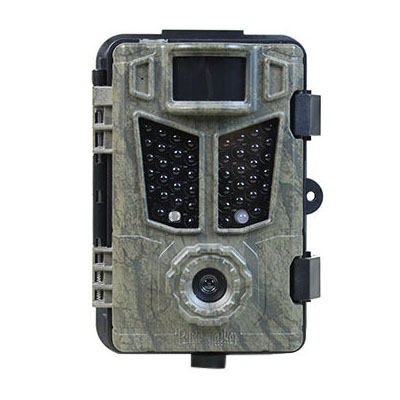
Big Eye D3
Among the photographic traps we tested, the Big Eye D3 stands out for its excellent value for money. It mounts a wide-angle lens, an uncommon feature among camera traps, and is therefore suitable for shooting a wide field thanks also to a generous supply of IR LED illuminators (invisible light). It is often used for video surveillance.
